Health
Doctor Discusses If Neck Cracking For Relief Boosts Stroke Risk
Dr discusses how frequent neck cracking might impact blood vessels and lead to stiffness relief


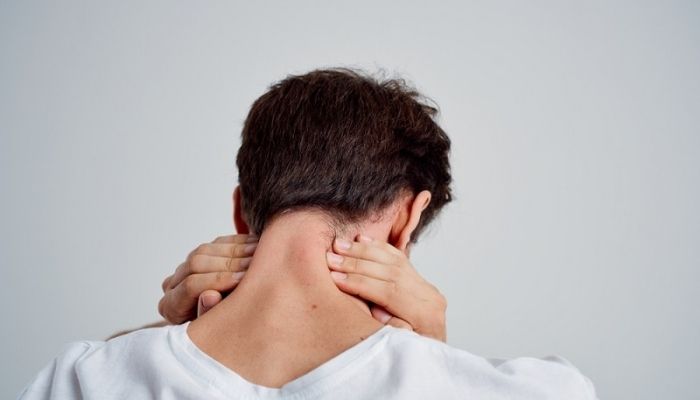
Many people habitually crack their necks for quick comfort from stiffness or stress, often without considering the consequences.
Is this common action potentially harmful? Dr Kunal Sood, MD, who is board-certified in both Anesthesiology and Interventional Pain Medicine, discusses in a Wednesday Instagram post whether neck cracking could elevate stroke risk.
What actually happens when you crack your neck
Dr Kunal elaborates on what occurs within the body when you crack your neck.
“If you’re someone who regularly pops or cracks your neck because it feels relieving, it helps to understand what’s actually happening underneath,” he notes.
He clarifies that the familiar popping sound isn’t the real issue. “That temporary relief comes from rapidly stretching a joint and releasing gas bubbles in the synovial fluid. The sound you hear is not harmful on its own,” he states.
Dr Sood explains that the actual risk stems from how often and how vigorously the neck is moved. “Problems arise when the neck is repeatedly forced beyond its normal range of motion,” he says.
“Over time, this can loosen the ligaments and destabilise the cervical spine, allowing more uncontrolled movement during sudden twists.”
How does it increase the risk of injury or stroke?
As stability decreases, the neck's inner structures face greater vulnerability. “Sharp or forceful neck movements can place abnormal shear stress on the vertebral and carotid arteries that run through the neck,” Dr Sood points out.
Although rare, such stress can result in severe complications. “The inner lining of an artery can tear, a condition known as cervical artery dissection.
"When this happens, blood may collect at the injury site, form a clot, and potentially travel to the brain, blocking blood flow and causing a stroke,” he details.
Safer ways to relieve neck stiffness without cracking it
Dr Sood emphasises that such incidents are uncommon. “Most people who crack their neck will never experience this.
"However, the mechanism is well documented, which is why repeated, forceful neck manipulation, especially self-manipulation, is not recommended,” he mentions.
For those experiencing neck stiffness or tension, there are safer alternatives. “Gentle mobility exercises, posture correction, targeted strengthening, or guided therapy are far better options than aggressive popping,” Dr Sood recommends.
He concludes by advising: “It’s worth asking yourself what’s really happening inside your neck the next time you feel the urge to crack it.”
Note to readers: This article is purely for informational purposes and is not a replacement for professional medical guidance.


